
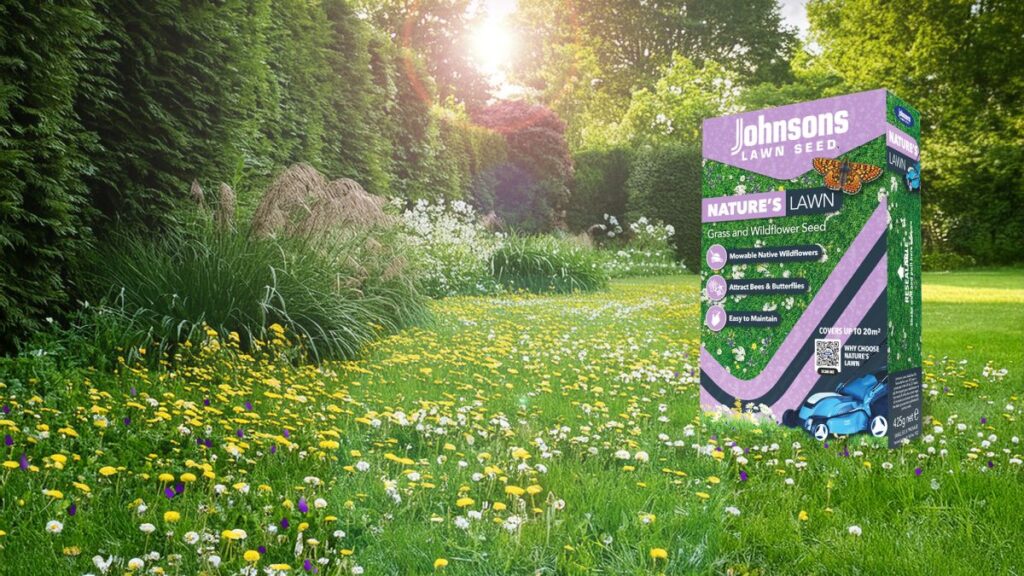
For the month of May, Johnsons Lawn Seed is encouraging gardeners to put the mower away and let lawns grow, helping to support bees, butterflies and other wildlife as part of Plantlife’s No Mow May initiative. Alongside this, Nature’s Lawn is being highlighted as a simple way to go one step further – creating a lawn that works for both people and pollinators.
First launched in 2019, No Mow May shines a light on the dramatic loss of natural habitats, with almost 7.5 million acres of flower-rich meadows and pastures lost in the UK since the 1930s. The impact has been significant, with declining numbers of pollinators and insect-eating birds. In response, Johnsons is encouraging gardeners to see their outdoor spaces as part of the solution – whether that’s allowing grass to grow longer or introducing nectar-rich wildflowers to attract beneficial insects.
How to get involved
Taking part doesn’t mean letting your garden become unkempt. Nature’s Lawn (RRP £12.99) offers a flexible solution – a resilient lawn that can be kept neat when mown, but equally left to grow more freely to support wildlife. Blending slow-growing, drought-tolerant grasses with native perennial wildflowers, it creates a practical, family-friendly space that becomes richer in biodiversity over time, as flowers establish and naturally self-seed.
For smaller areas or added bursts of colour, Johnsons Celebration Wildflower Tins provide an easy way to transform part of a lawn or border into a vibrant mini meadow. Containing 17 annual species including cornflowers, poppies, cosmos, marigolds and daisies, they offer a rich source of nectar for pollinators while bringing movement and seasonal interest into the garden.
Why rewilding matters
Pollinators such as bumblebees play a vital role in supporting the plants we rely on for food, while longer grass provides essential habitat for butterflies to lay eggs and for larvae to develop. With around three-quarters of UK butterfly species in decline, even small changes can make a meaningful difference. Wildflower areas also produce seeds for birds and provide shelter for a wide range of wildlife, helping to create a more balanced and resilient garden ecosystem.
Get the kids involved
No Mow May is also a great opportunity to get children gardening. Making simple seed bombs using wildflower seed, clay and compost is an easy and engaging activity – once dried, they can be scattered into borders or lawns to create a burst of summer colour.
With wildflowers establishing in as little as eight weeks, it’s not too late to take part. By leaving lawns uncut this May, gardeners can create a haven for pollinators, birds and other wildlife, while enjoying a more relaxed, nature-led approach to gardening.
Guy Jenkins, Consumer Manager at Johnsons Lawn Seed, says: “No Mow May represents a real opportunity for homeowners to support biodiversity in their own gardens. Nature’s Lawn empowers gardeners to be part of the solution, creating spaces that are both practical and beneficial for wildlife.”
Nature’s Lawn is available with an RRP of £12.99, while Johnsons Celebration Annual Wildflowers are available in 50g tins (RRP £9.99), both from garden centres and retailers.
Wildflowers included in Nature’s Lawn
The Nature’s Lawn mix comprises 96% grasses and 4% wildflowers. The wildflower component includes*:
- Birdsfoot Trefoil
- Black Medick
- Black Knapweed
- Lady’s Bedstraw
- Meadow Buttercup
- Oxeye Daisy
- Self Heal
- Yarrow
*subject to wildflower availability