
With periods of hot, dry weather becoming more common across the UK, water usage is under increasing pressure. For UK households, a water butt is a simple, affordable way to make better use of rainfall, reduce reliance on mains water, and keep gardens thriving during hosepipe bans. Whether you choose a ready-made system or a DIY solution, collecting rainwater helps save money, supports the environment, and provides a reliable water source when it’s needed most.
Whilst it’s not rained in the many of parts of UK for the last month, getting prepared for the next rain fall with a water butt could be one of the best investments you make this season!
Here, Envii, creators of responsibly sourced garden, lawn and pond care solutions that are safe for people, pets and the planet, give their guidance on how to use a water butt, the benefits of collecting and reusing rainwater and how this can help the environment and save you money – and save your garden through a long hot summer.
What is a water butt and how does it work:
A water butt works by collecting rainwater from your roof gutters via a downpipe diverter, storing it in a large container, and allowing you to use the stored water for watering plants or cleaning garden tools or shoes. When the water butt is full, any excess water simply continues down the downpipe to the drain. A tap at the bottom of the water butt allows you to dispense the stored water into a watering can, or similar, for use.
Save money:
A water butt will save you money on your water bills as you’ll be using free rainwater rather than paying for the water from your tap or hose to water your plants and keep garden looking green and healthy.
Support the environment:
Aside from saving money, a water butt reduces the pressure on water reservoirs, especially during summer months when rain is sparse.
A water butt also reduces your carbon footprint by cutting the energy needed to treat, pump, and deliver mains water to your home. By capturing rainwater before it enters the drainage system, you reduce demand on water treatment facilities while making use of a natural resource. You’re also reducing the amount of rainwater available to collect as surface water and cause potential overflowing drains or floods.
Plants prefer rainwater:
Rainwater contains nutrients that are filtered out of tap water for human consumption, and contains less chloride and fluoride. Plants much prefer rainwater to tap water, and with a water butt, they can have it all year round.
Keeping your water butt clean and well-balanced
If a water butt isn’t topped up or used regularly, the water inside can sit for long periods, particularly during dry spells. While the water may move slightly when some is drawn off, standing rainwater can gradually become stagnant. Over time, this can cause the water to turn green and encourage the growth of algae, bacteria, and fungi, which may be harmful to plants if used untreated.
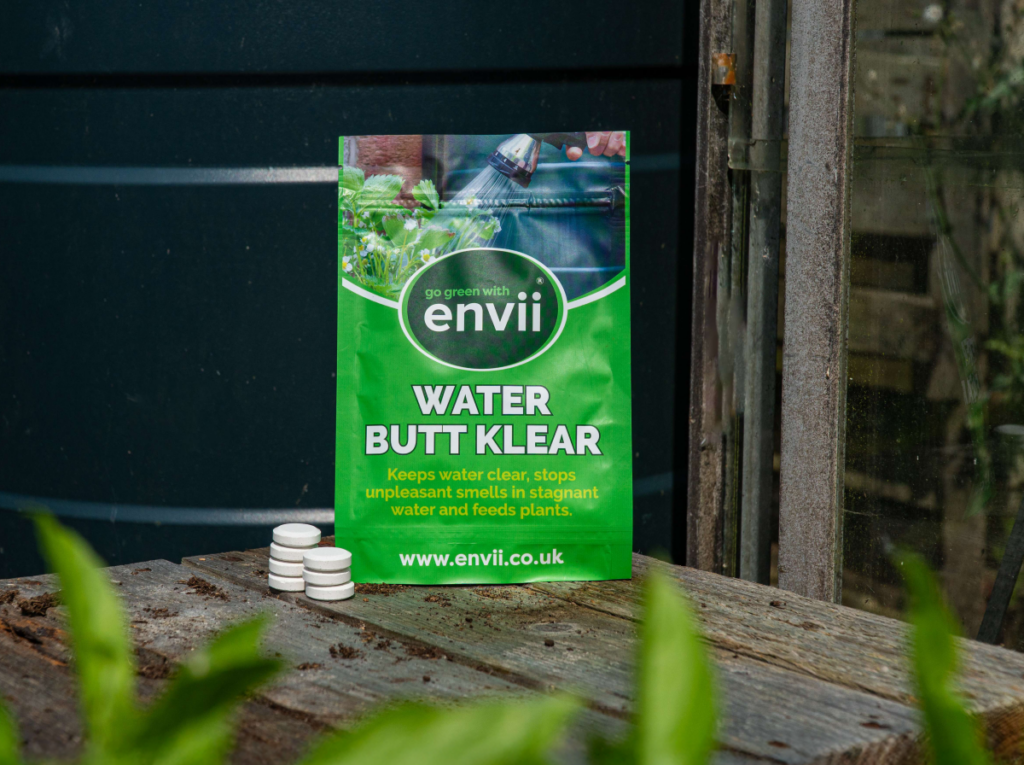
To prevent these issues, it’s important to keep water butt water clean and well-balanced. Envii’s Water Butt Klear uses an organic blend of beneficial bacteria, to effectively target the organic matter that causes green water, unpleasant odours, and algae build-up.
Unlike traditional water butt treatments that rely on harsh sanitisers or disinfectants to kill bacteria, Water Butt Klear is a safe and non-toxic solution that helps maintain healthy water, keeping it clean and fresh. Additionally, the unique blend of bacteria promotes strong plant growth and helps reduce plant diseases, offering a natural and sustainable way to care for both your water butt and garden.
Make your own DIY water butt:
You can buy water butts and the diverter kits from most hardware stores, local garden centres, or even online. But if you don’t want to buy a water butt and would prefer to be more resourceful, why not make your own?
You can use any large plastic container such as an old garden bin or wheelie bin. The container you choose will need a lid, or you can fasten mesh/chicken wire to the top; this will be to keep insects and debris out of the water. You can just place your container underneath the gutter where it will catch the runoff, or you can buy a diverter kit to attach to your guttering. You’ll need to have a hole at the bottom of the container that you can place a tap in, or at least a plug to get your rainwater out to be used.
If you don’t have a garden and perhaps just a balcony, you could use an old plastic milk carton. Turn it upside down and cut a section of the base off – this will be where the water is caught, and the lid will act as your tap when unscrewed; fasten it to your balcony using twine or cable ties. You’ll catch a small amount of water, but this will be ideal to water a few household plants or window boxes.
For more information or to shop the full range, visit www.envii.co.uk