
Across the UK, climate change is disrupting biodiversity by altering habitat conditions faster than species can adapt, leading to reduced populations of plants, invertebrates, and seabirds. Rising temperatures and extreme weather are shifting species northward, forcing changes in flowering, nesting, and migration times, while promoting the spread of invasive species and diseases.
As Spring awakens and we recover from endless weeks of rain and soggy lawns and look ahead to warmer, dryer weather, climate change and its impact on the balance of nature and wildlife is becoming increasingly important to UK gardeners.
Climate change – every gardener can do their bit!
As we step outside again and begin to prep our gardens for sunnier climes, ensuring our outdoor spaces support biodiversity should now be top of the list along with those essential spring-cleaning gardening jobs like sweeping the patio and dusting down the BBQ.
Eggologic, an innovative vertical-garden system conceived by a team of biologists and scientists who - worried by the mounting threat of climate change - wanted to make a tangible difference, even if only in small, domestic green spaces, including balconies and urban gardens.
Which a choice of pods; plant pods for flowers, herbs or vines; and wildlife pods such as nesters for cavity-nesting birds and “hive” pods designed to shelter solitary bees, Eggologic’s clearer modular system is designed to support biodiversity, bringing plants, birds and pollinators into our living spaces, helping to create healthier eco-systems.
Here Eggologic’s experts provide tips on how we can build biodiversity into our gardens and outdoor spaces, however big or small: “Think of your garden or balcony not just as a collection of plants, but as a tiny, living ecosystem. When you increase biodiversity – the variety of plants, insects, birds, and soil microbes – you are essentially building a self-sustaining “neighbourhood” where everyone has a job to do. A biodiverse garden, rich with varied, seasonal plants, fights climate change, supports wildlife, and improves human wellbeing by offering a thriving, natural space.”
Simple ways to increase garden biodiversity:
- Plant native species: Native plants are best suited to local insects and pollinators.
- Create habitats: Add log piles, bug hotels, or ponds for creatures to live, hide, and hibernate.
- “Messy” gardening: Leave some areas untidy, such as allowing leaf litter or long grass, to provide shelter for wildlife.
- Water features: Adding a pond can increase garden biodiversity by up to 50%. Even a small bird bath or a container of water provides essential hydration for birds and insects.
- Specific pollinator support: Leave “butterfly-loving” plants like garlic mustard (for Orange-tip butterflies) and stinging nettles (for Peacocks) rather than weeding them out.
- Dead hedges & log piles: Repurpose woody waste into “dead hedges” or log piles in shady corners to house hedgehogs, fungi, and beetles.
- Vertical greenery: Use living walls or climbing plants (e.g., native Ivy) to create “green corridors” for wildlife movement, especially in urban spaces.
- Wild edges: Let a section of your lawn grow naturally. Mowing less frequently increases available nectar and provides cover for small mammals.
- Organic gardening: Avoid synthetic pesticides and fertilisers; organic methods can increase soil biodiversity by up to 30%.
- Year-round support: By planting different species that bloom at different times, you provide a consistent food source for these insects from early spring through late autumn.
The Eggologic line-up
- Planter Pod (£27) – A botanist-designed wall planter perfect for herbs, flowers or small edibles. Its clever removable insert insulates roots and improves drainage, making growing easy and effective.
- Trellis Pod (£23) – Great for trailing or climbing plants. It’s also a winter bird-feeder or nesting-material depot — ideal for nature lovers keen to give back to wildlife.
- Nester Pod (£33) – Co-designed with ornithologists, this is a safe, ventilated nesting site for cavity-nesting birds — a thoughtful gift for anyone who cares about supporting native species.
- Hive Pod (£33) – Designed for solitary bees, this pod offers a cool, moisture-free habitat for essential pollinators — a meaningful way to help biodiversity right from your wall.
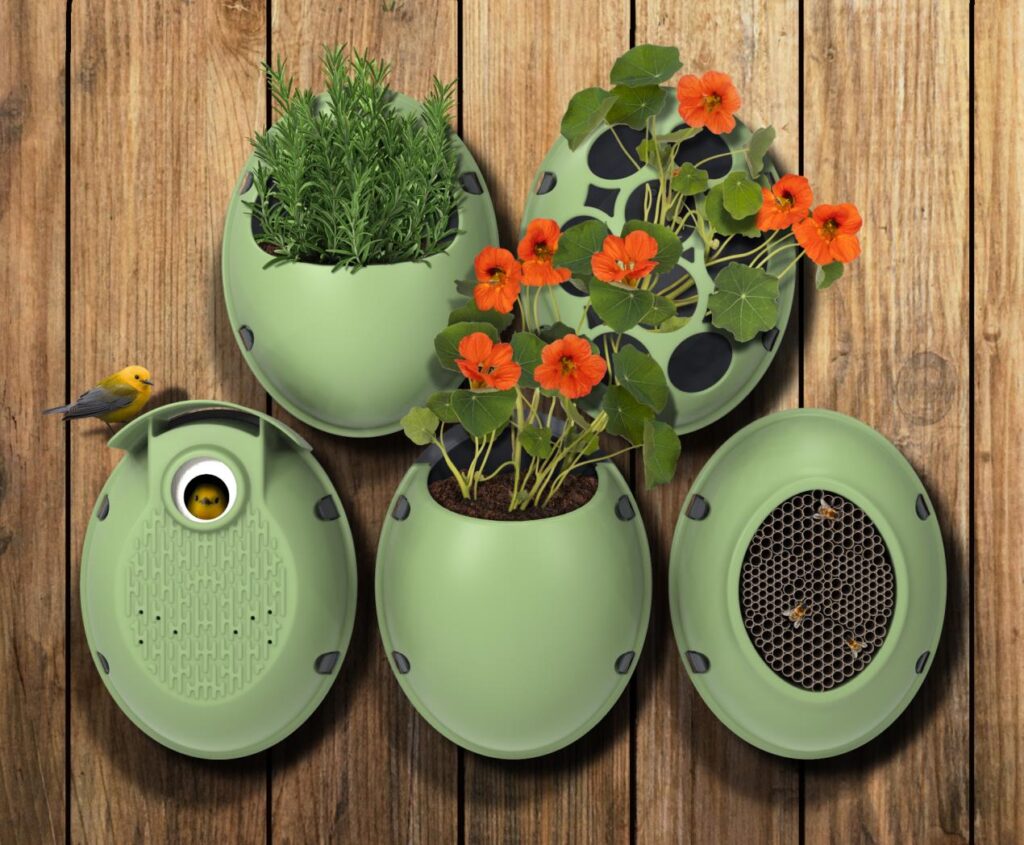
Available now via eggologic.com
Notes to editors:
Biodiversity hotspots vs areas of concern
Areas with stronger biodiversity:
- South West England (Devon, Cornwall, Dorset) – high plant and pollinator diversity.
- Wales and western Scotland – lower agricultural intensification supports richer ecosystems.
- Cities with connected green infrastructure (including London) can sustain diverse wildlife populations when garden networks remain connected.
Areas lacking biodiversity:
- Highly urbanised regions with high levels of paving/artificial surfaces.
Species requiring additional support
Birds:
- Starling (significant long-term decline)
- House sparrow
- Swift
- Song thrush
Primary drivers:
- Urban development and habitat loss
- Loss of nesting spaces
- Reduced insect availability
- Garden paving and fragmentation
Pollinators and insects:
- Wild bees
- Hoverflies
- Butterflies and moths
Drivers:
- Habitat fragmentation
- Reduced flowering resources
- Pesticide use
- Climate pressures
Sources:
https://royalsocietypublishing.org/rspb/article/282/1803/20142849/77599/Where-is-the-UK-s-pollinator-biodiversity-The
https://researchbriefings.files.parliament.uk/documents/POST-PN-0619/POST-PN-0619.pdf
Climate change impacts on garden biodiversity
Climate change is accelerating pressures on urban wildlife:
- Seasonal mismatches between plants and pollinators.
- Range shifts in species distributions.
- Increased drought stress within urban environments.
- Extreme weather affecting breeding and survival rates.
Key indicators:
- UK species have declined by approximately 19% since 1970.
- Nearly 1 in 6 UK species are now at risk of extinction.
Sources:
https://stateofnature.org.uk/
https://earthwatch.org.uk/state-of-nature-2023-uk-wildlife-continues-to-decline-but-urban-nature-could-be-a-solution/