
With certain species of solitary bee showing marked declines over the past 30 years, it has become more important than ever to support these important pollinating insects. As the weather warms up and bees start to emerge, here are four things experts at Eggologic recommend you do right now to encourage solitary bees into your outdoor space and give them a helping hand throughout the year.
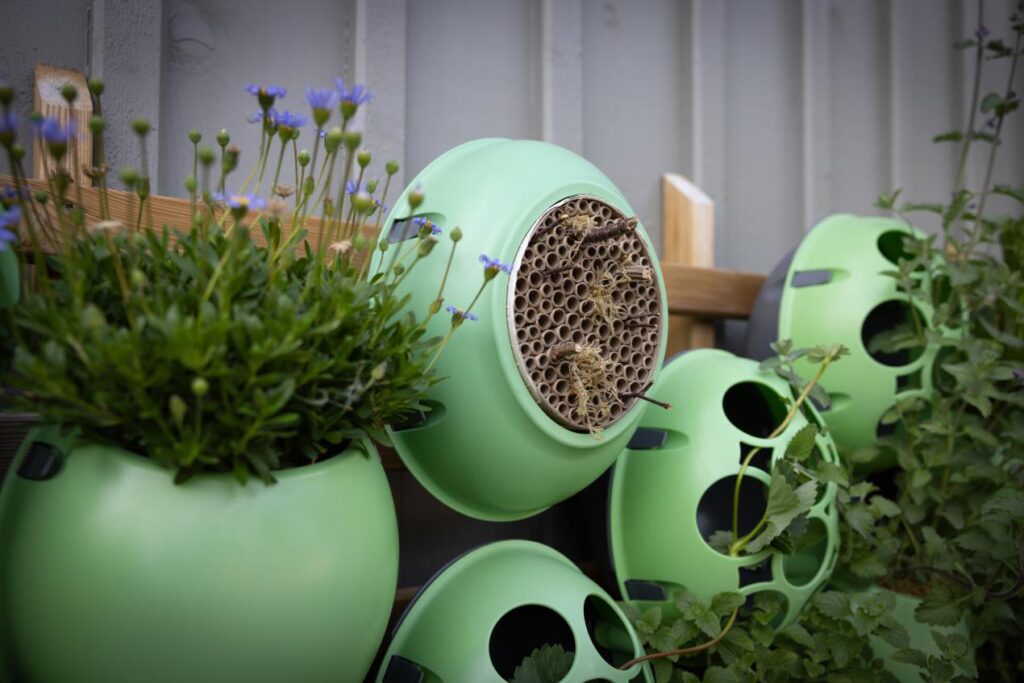
Create a safe nesting space
Unlike honeybees, solitary bees don’t live in hives or produce honey. Instead, they nest in small cavities, often in hollow stems, wood tunnels, or soil. By offering a dedicated nesting habitat, you can dramatically increase their presence in your garden.
Male solitary bees have already started emerging now that the temperature has stabilised, and females will be out soon ready for mating and nesting to begin next month, so there’s still time to get a bee hotel up in your garden or balcony.
Eggologic’s Hive Pod is a thoughtful-engineered nesting chamber, designed specifically for solitary bees. Precision-sized nesting tubes made attract a wide range of beneficial solitary bee species, including mason bees, which are one of the most efficient pollinators in the UK. The Hive Pod’s cool, insulated nesting chamber protects developing bee larvae from overheating, while its modular removable interior helps maintain a healthy environment for bees, free from parasites and mould.
Plant a diverse mix of bee-friendly blooms
A thriving bee population depends on a continuous supply of nectar and pollen. Solitary bees will begin their food gathering frenzy in May, laying eggs in their nests and sealing them up with nutrient balls of pollen and nectar. The best way to support bees in their endeavours is by planting a variety of flowering species that bloom from early spring through to late summer and autumn. Top choices include:
- Early bloomers, like crocus, lungwort, and hellebore
- Summer staples, such as lavender, catmint, honeysuckle, and foxglove – plus sweet marjoram, which is a favourite for Hairy-Footed flower bees
- Late-season flowers, like sedum, asters, nectar-rich coneflowers, and verbena bonariensis
Avoid pesticides and choose natural alternatives
Even small amounts of chemical pesticides can disrupt bee navigation, reproduction, and their ability to forage. To protect both solitary and social species of bee, gardeners should try and adopt bee‑safe practices in their outdoor spaces:
- Hand-picking pests off plants
- Using organic deterrents, like neem or soapy water
- Encouraging natural predators such as ladybirds and lacewings
Reducing chemical use helps maintain a balanced ecosystem where bees and beneficial insects can thrive. In fact, avoiding synthetic pesticides and fertilisers in favour of organic methods can increase soil biodiversity by up to 30%.
Provide a source of water
Bees need water just as much as they need nectar and pollen. They use it to stay hydrated, to cool their nests, and to soften materials to seal their nests with. However, many garden water sources can be hazardous, with steep edges or deep basins that cause bees to drown. You can help by offering shallow, safe, accessible water sources, such as a shallow dish filled with clean water and pebbles for bees to land on, a birdbath with stones or floating cork pieces or even a gently dripping tap or hose left to create a small, muddy patch for mason bees, which use mud to seal their nesting chambers.
Solitary bees are gentle, efficient, and indispensable. With simple actions gardeners can play a crucial role in strengthening local ecosystems. By installing an Eggologic Hive Pod, gardeners can directly support local bee populations, whilst their plants reap the benefits, with improved pollination and healthier harvests.
[BOX OUT]
Small but mighty
- Mason bees are exceptional pollinators, capable of visiting up to 1,000 flowers every day! Their hairy bodies allow them to transfer pollen efficiently from one flower to another, doing the work of as many as 100 honeybees.
- Leaf-cutter bees play a vital role in the pollination of fruit trees & plants, vegetables and wildflowers. They are also fascinating to watch, carrying little sections of leaf back to their nests during spring months.
- Red Mason Bees are particularly valuable in a garden, allotment or orchard, as they have a soft spot for spring-flowering shrubs and trees, efficiently pollinating fruit trees and crops, such as apples, pears, plums cherries, raspberries and strawberries.
- Hairy-footed Flower bees are often mistaken for bumblebees because of their fluffy bodies. The males can be seen hovering around flowers and showcasing their aerial acrobatics to attract a mate.
- Carpenter bees conduct ‘buzz pollination’, where they vibrate their flight muscles to release pollen from plants with poricidal antlers. This specialised pollination is necessary for the successful reproduction of around 8% of the world’s flowering plants, including tomatoes, peppers, potatoes, and blueberries.
[BOX ENDS]
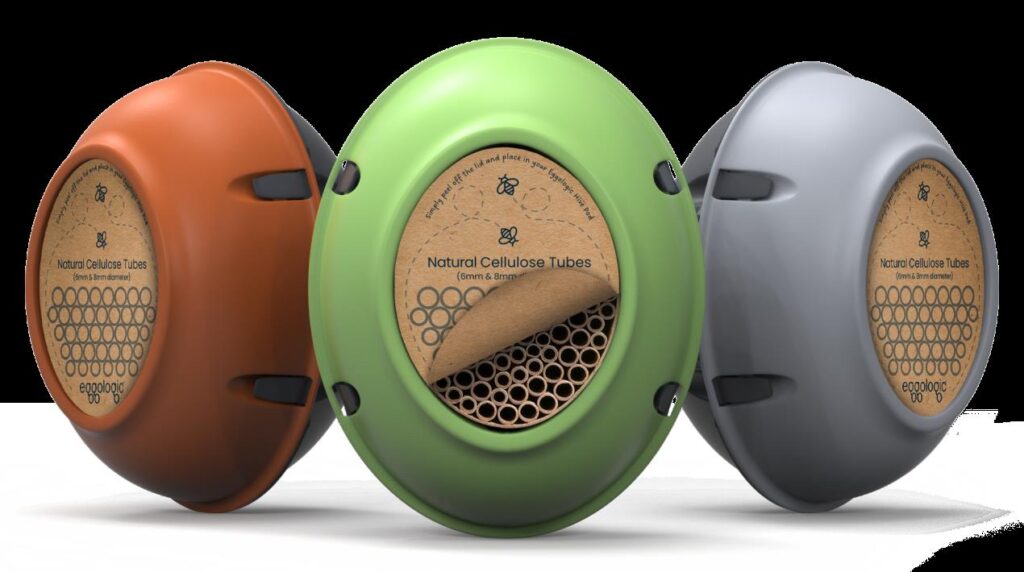
The Hive Pod forms part of Eggologic’s wider modular vertical garden family. Which a choice of units, including plant pods for flowers, herbs or vines; and wildlife pods, Eggologic’s smart system is designed to support biodiversity, bringing plants, birds and pollinators into our outdoor spaces and helping to create healthier eco-systems.
The Eggologic line-up
- Planter Pod (£27) – A botanist-designed wall planter perfect for herbs, flowers or small edibles. Its clever removable insert insulates roots and improves drainage, making growing easy and effective.
- Trellis Pod (£23) – Great for trailing or climbing plants. It’s also a winter bird-feeder or nesting-material depot — ideal for nature lovers keen to give back to wildlife.
- Nester Pod (£33) – Co-designed with ornithologists, this is a safe, ventilated nesting site for cavity-nesting birds — a thoughtful gift for anyone who cares about supporting native species.
- Hive Pod (£33) – Designed for solitary bees, this pod offers a cool, moisture-free habitat for essential pollinators — a meaningful way to help biodiversity right from your wall.
Available now via eggologic.com