The end of March marks the start of the busy nesting season, so now is the time for bird lovers up and down the country to hang up their nesting houses!
Placing a nesting pod in your own back garden helps to provide safe shelter for birds to lay their eggs and bring up their chicks, and makes a fascinating focal point to observe the flurry of bird-life activity as busy bird parents forage for nesting materials and food for their young, and fly back and forth to their nesting sites multiple times a day.
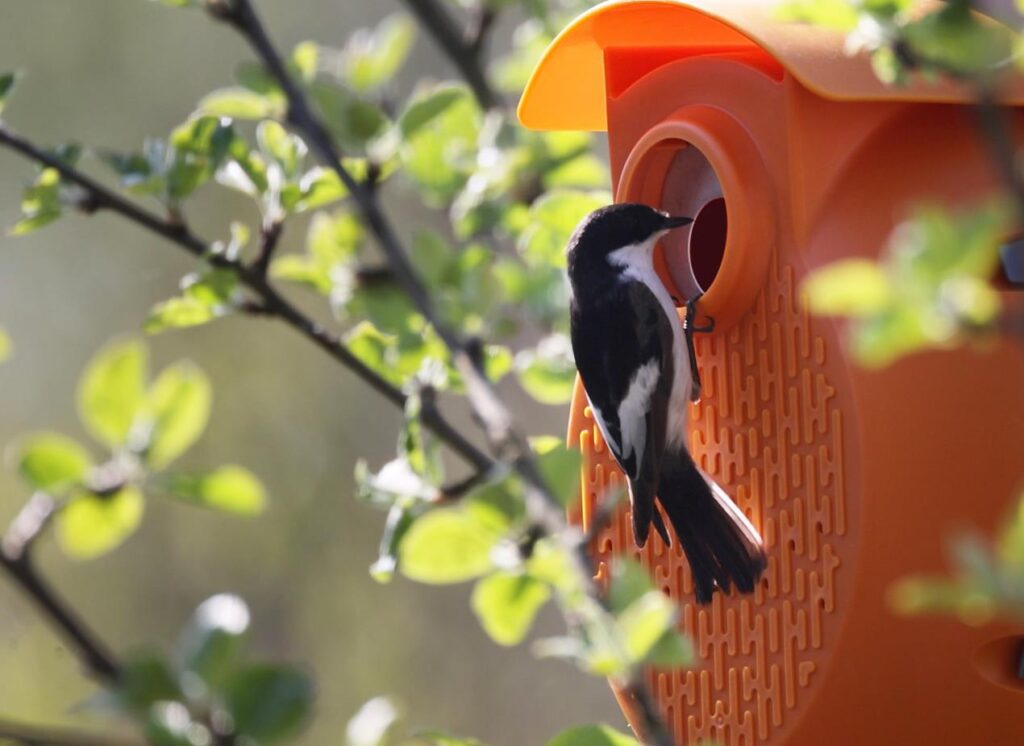
A nesting house also creates a wonderful opportunity for families and children to engage with the wonder of nature in their very own back garden and the excitement and anticipation of seeing the first fledglings poke their heads out into the outside world for the very first time and take their first tentative flight.
Meet Eggologic’s Nestor Pod – the ultimate bird nesting sanctuary
Eggologic’s award-winning Nester pod has been created with the guidance of ornithologists to provide a safe, climate-optimized enclosure for cavity-nesting bird species critical to both a healthy garden and broader ecology in both rural and urban environments.
Perfect for small to medium-sized nesters such as tits, flycatchers, sparrows and redstarts, the Nester pod’s unique design includes a strong outer shell made from 100% recycled resin to deter predators and harsh weather and comes in a choice of colours including Harvest Orange, Tuscan Green or Stone Grey.
A replaceable inner shell – means birds get a clean new bird house every year!
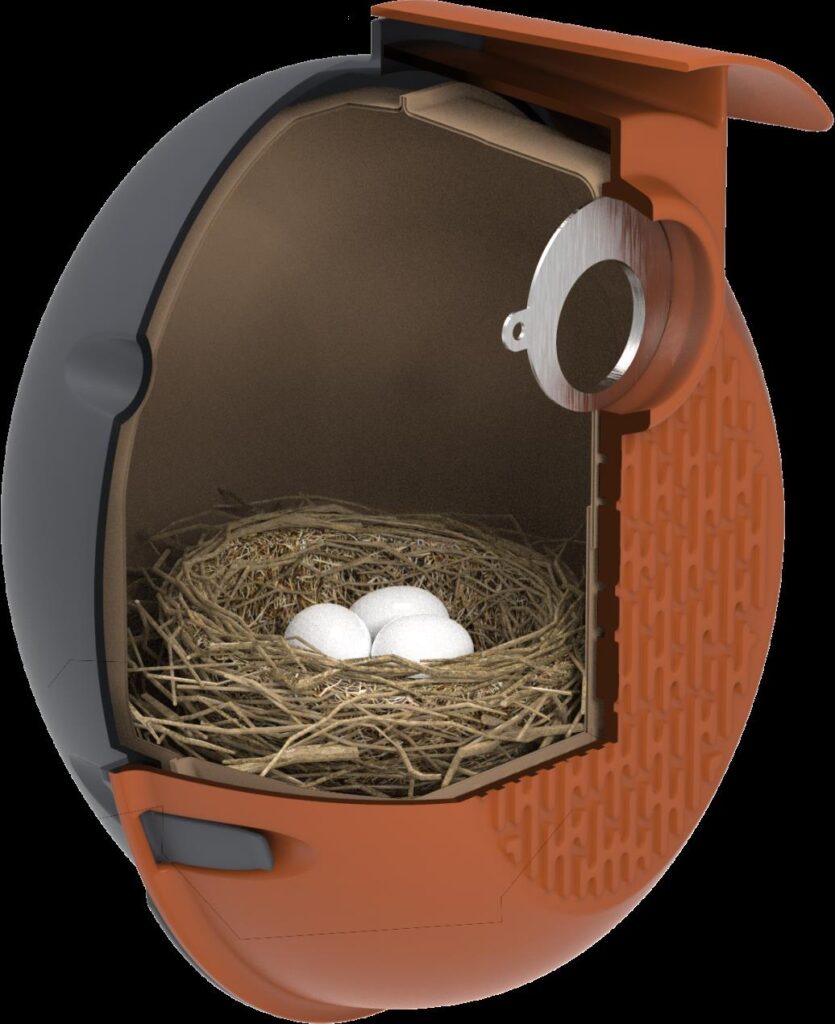
- Inside the Nesters outer shell is a replaceable inner shell made from 100% natural wood fibre providing thermal insulation while also helping to regulate humidity – avoiding the mildew, rot and pest issues that plague wood nesting boxes.
- After the nesting season is complete and the fledglings have left, the old Nester pod insert and used nesting material can be removed and placed in the compost pile, and a new clean inner shell can be inserted ready for next year’s nesting season.
A choice of entry sizes to suit different species
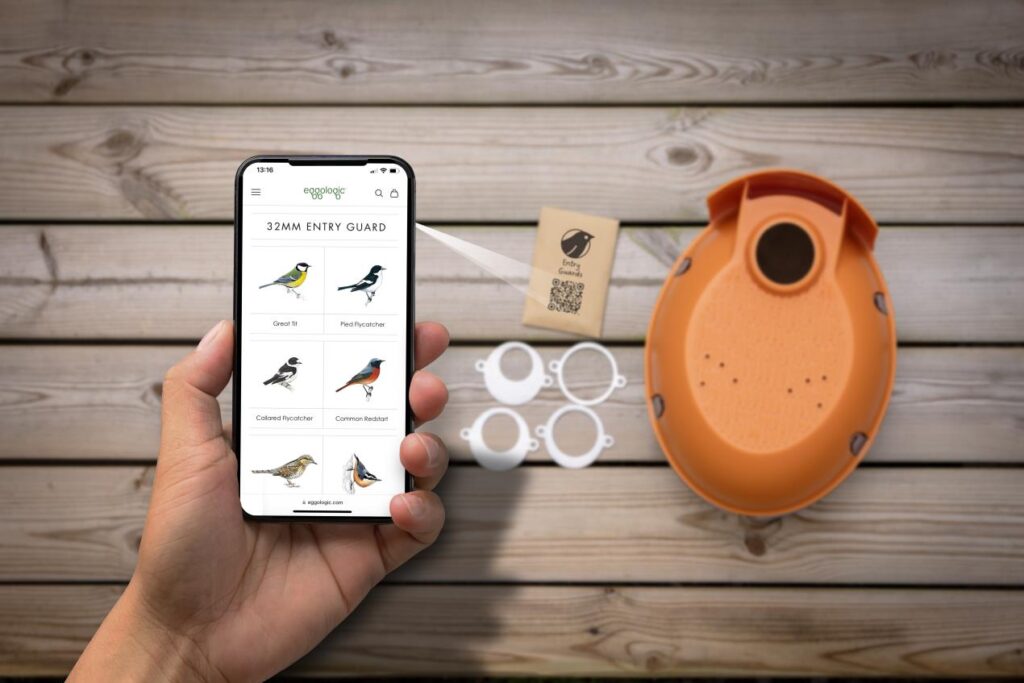
Cavity-nesting birds can be very choosy when it comes to selecting a nesting space, and one of the key features they evaluate is the size of the entry. Eggologic’s Nester also comes with a pack of four different sized Entry Guards (28/32/38/43mm) meaning you can select the entry size to suit which species you would prefer to attract, whilst providing security to smaller garden birds.
Although the busy nesting season begins towards the end of March and runs until early September, resident birds start looking for places to nest as early as January and during the winter they often use nesting boxes to shelter during the cold nights, meaning the life of your nester box is an important year-round cycle.
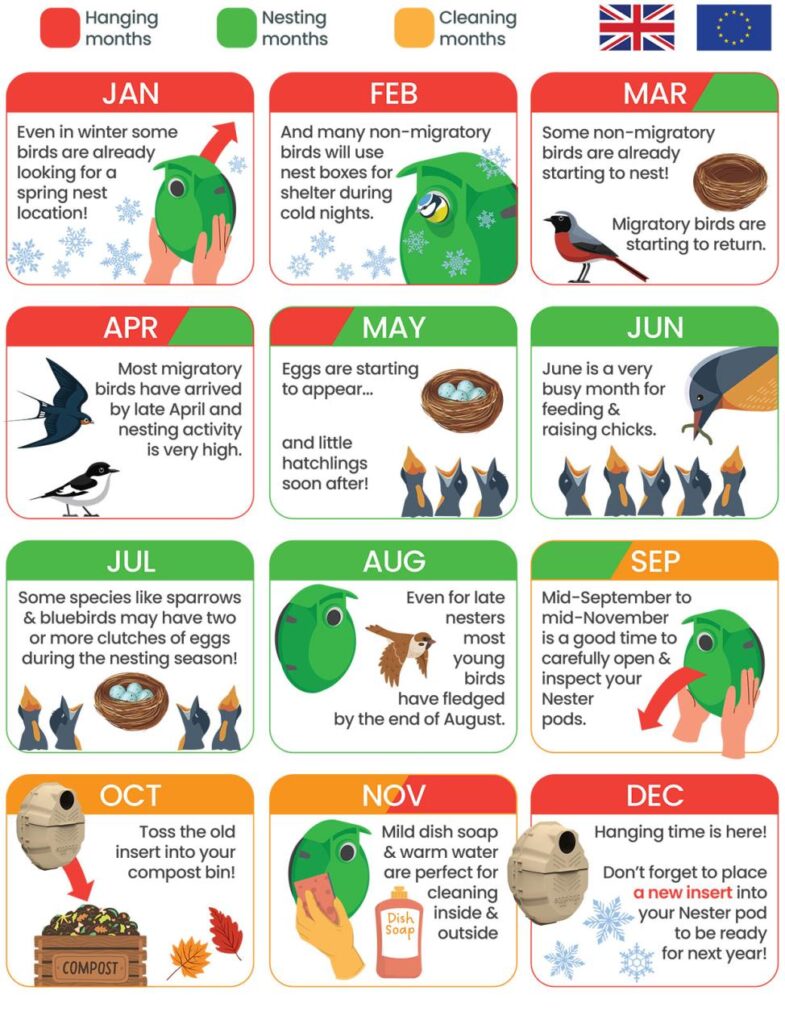
To get the most out of your nester box and do your best to support your feathered friends all year-long, follow Eggologic’s nesting calendar:
January: Even in winter resident birds already start looking for places to nest
February: Many resident (non-migratory) birds use nest boxes as shelter during cold nights.
March: Non-migratory birds are already starting to nest. Migratory birds start to return to the UK.
April: Most migratory birds have arrived by late April and nesting activity is very high
May: Eggs are starting to appear
June: June is a very busy month for feeding and raising chicks
July: Some species like sparrow and bluebirds may have two or more clutches of eggs during the nesting season
August: Even for late nesters most young birds have fledged by the end of August.
September: Mid-September to mid-November is a good time to carefully open and inspect your Nester pods
October: Toss the old insert into your compost bin
November: Mild dish soap and warm water are perfect for cleaning inside and outside the Nester
December: Time to re-hang your nesting boxes and don’t forget to place a new insert into your Nester pod, ready for next year.